
Supply Pain – CFO
 Usually, the container ports of Los Angeles and Prolonged Seaside are the busiest in the Western Hemisphere, a hive of 24/seven action as cargo moves from ships to vans or trains. But on one particular current afternoon, a flotilla of more than two dozen ships, carrying any place from 6,000 to eleven,000 twenty-foot-lengthy containers, sat idly in the coastal waters of San Pedro Bay. They experienced been stranded for weeks, waiting for the green mild to berth and unload their cargo.
The inactivity at the ports is a symptom of a peculiar side-influence of the COVID-19 pandemic, a mismatch of supply to desire that has remaining U.S. manufacturers acquiring to wait around months for uncooked products and elements to make or assemble items.
Shopper desire has roared back to everyday living with the lifting of COVID lockdowns and authorities reduction investing. Even so, supply chains are out of sync, with manufacturing lines creaking back to overall operational potential immediately after staying shut down or curtailed. And shipments are staying delayed at ports by shortages of dock personnel and truck motorists.
“After a time period of reduced desire forcing manufacturers and suppliers to curtail manufacturing, a spike in desire makes an upsurge in orders that suppliers aren’t well prepared to meet in usual delivery timeframes,” claims Mike Varney, supply chain consulting spouse at international general public consulting, technology, and accounting company Crowe LLP.
Polaris, a publicly-traded company of motorcycles, snowmobiles, boats, and ATVs, is familiar with this phenomenon all too very well. A calendar year back, it temporarily closed its twenty U.S. and international factories, focusing on value-slicing to survive the financial meltdown. “We necessary to preserve funds, so we stopped the stop flow of elements from China,” recalls CFO Mike Speetzen.
The vegetation are now working again amid a increase in orders that began in December. But although customers are completely ready to invest in again, Polaris “can’t get products in quickly adequate,” according to Speetzen.
“Our international supply chain,” he claims, “is struggling to get manufacturing back up to velocity.” Polaris’s head of operations told Speetzen that its on-time delivery fee experienced dropped to thirteen% from 80% due to the absence of dock personnel.
There’s no vaccine for the supply-chain side influence. At La-Z-Boy, a company of recliner chairs, sleeper sofas, and tables, gross sales have also boomed, jumping eighteen% in February. A calendar year back, it experienced shuttered its six North American manufacturing vegetation and another one particular in Mexico and furloughed most personnel. But CFO Melinda Whittington laments: “Due to port blockages and trucker shortages, we cannot get provides in quickly adequate to assemble our personalized orders. Whereas it took us four to six weeks previously to deliver, it is taking us five to 9 months now.”
Much too Minor, Much too Late
President Joe Biden acknowledged the trouble in February when he requested a 100-day authorities review of U.S. manufacturing vulnerabilities. A few days later on, 8 states’ governors prompt he do more to boost semiconductor chips’ availability. “In mild of the growing checklist of automakers, suppliers, and sellers negatively afflicted by the lack, we check with you to redouble people initiatives,” they wrote to the president.
 In the automotive market, the diminished supply of plastic elements, petrochemicals, and semiconductor chips utilised to command energy home windows, airbags, and dashboards has prompted most manufacturers to lessen manufacturing potential. “We cannot get elements in fast adequate from our international supply chain to make vans, at a time when the desire for them is bigger than any of us ever expected,” claims a senior finance executive at a large company of business vans who requested anonymity.
The chip lack has also resulted in stoppages of manufacturing of desktops, smartphones, health care gear, vacuum cleaners, fridges, and clever units plugged into the internet of things. “Like every market baffled by the desire implications of COVID-19, we did not make as several semiconductors simply because the orders from our standard purchasers fell off a cliff,” claims a senior finance executive at a important chip company.
The executive, who requested anonymity, provides, “We can only make what we can provide, which is dependent on our buyers’ ability to forecast desire signals. When they told us desire seemed dead, we curtailed our manufacturing. They all of a sudden strike us with these huge orders that take us 26 weeks to make, on typical. There’s only so a lot we can do.”
Meanwhile, in the household setting up items market, there is a great deal of desire from home owners for new decks and additions. But John Tunison, CFO at Trussway, a maker of wood trusses for multifamily housing, claims that “As a lot as 40% of solitary-family households recently marketed have still to break floor. The explanation is they use a ton of wood, and lumber desire is bigger than supply.”
Like a spigot, client desire all of a sudden turned off as the pandemic erupted and then just as all of a sudden turned back on as the financial state stirred back to everyday living and federal largesse set excess funds in Americans’ pockets. Personal incomes shot up 10% in January, fueling a 5.3% boost in retail gross sales the exact month.
But as Gary Lynch, CEO of supply chain danger consulting company The Possibility Challenge, claims, “When desire fell precipitously in the early months of the pandemic, the supply chain slowed to a trickle. When desire roared back, it took a lot for a longer time for suppliers to catch up, creating months and months of delay. Now provides are staying delivered, but there are only so several containers to ship them in and so several ports to acknowledge all these ships.”
Once a container ship offloads its cargo at crowded U.S. ports, the products are transported by rail and significant-duty semis to factory loading docks, distribution facilities, and retail outlets. But like other companies, trucking corporations uncovered it tough to forecast desire and pulled back sharply on hiring.
In accordance to The Journal of Commerce, the range of for-retain the services of truck staff members fell by 65,700 in October 2020 from the exact time period a calendar year previously. “The desire for truckers is surging, but several truckers enable go in the first couple months of the pandemic have due to the fact uncovered alternate employment,” claims Josh Nelson, a principal in the system and transformation practice at business advisory company The Hackett Group. “While there are a ton of people today, particularly immigrants, hunting to turn out to be truckers, the closure of DMV workplaces across the country built it tough to get a business driver’s license.”
Retaining Provide
At Costco, CFO Richard Galanti stories that about 70% of containers carrying imported items for sale at the retail giant’s 560 retail warehouse suppliers in the U.S. are a few weeks late, on typical. Factors could have been worse, even though. While Costco relies on 3rd-bash vans and rail to ship from ports to its cross-docks, it utilizes its have vans for the future action to retail warehouses. “Logistically, this can help lessen the time it will take to receive items. It is assisted take some of the sting out of this,” Galanti claims.
Other corporations have softened the sting through vertical integration, shorter supply chains, and included protection inventory. Marvin Doors and Home windows, a privately held company of home windows, doorways, and skylights, has vertically built-in a lot of its manufacturing, making sure a regular supply of lumber and fiberglass. It buys other items this kind of as window components from lengthy-time period suppliers. “We worked tricky around the many years to cultivate trust with our suppliers,” CFO Jim Macaulay claims. “When a provider claims it can only get us a partial shipment nowadays and promises the rest by Friday, we know they’ll come through.”
La-Z-Boy has benefited from comparable associations. “While lumber availability was a trouble for us and other manufacturers, we’re a huge purchaser of plywood, and that enabled more favorable therapy from our lengthy-time period suppliers,” claims Whittington. La-Z-Boy and Polaris have also preserved supply by acquiring a protection inventory of elements and completed objects. “If you necessary to have a mass-developed sofa, we could uncover you one particular,” according to Whittington. “That assisted offset the delay in our personalized-built household furniture.”
Claims Polaris’ Speetzen: “I began having to pay shut attention to COVID-19 infection costs in China, where we supply several elements, as early as January 2020. That gave me a heads up that we necessary to make certain adequate protection inventory in scenario of a slowdown. That inventory is lengthy gone now.”
A Revised Playbook
The pandemic has motivated some CFOs to tweak the playbook on supply chain management. Tunison, for occasion, has responded to the surge in lumber prices with a hedging system he launched in 2018. “At a time of climbing desire and bigger costs, we’re now executing the forward contracts at specified prices set for 9 months,” he describes. “It’s assisted us optimize income at a time when desire is upwards.”
 Speetzen offered economic help to some suppliers, and to improve the possibilities of obtaining priority therapy at the ports of Los Angeles and Prolonged Seaside, he dispatched further operations staff to do the job with the company’s freight forwarders. When port delays danger alienating customers, Polaris has opted for expedited air shipments. “Although the value was bigger than ocean shipments, and that was hard on the P&L, we could not enable our customers down,” Speetzen claims.
In accordance to Varney of Crowe LLP, the most significant lesson for corporations to find out from the supply chain disaster is the need to improve gross sales forecasting.
“The notion that you can make a forecast based on historical trajectories is of minimal worth when a Black Swan function happens,” he notes. Varney advises CFOs to examine serious-time desire facts and do the job closely with procurement and gross sales. “Daily gross sales facts on earnings prospects need to be when compared to procurement facts,” he claims. “Finance then can decide where capital should be allocated to maintain supply chain resiliency.”
In the long term, CFOs might be equipped to use blockchain technology to evaluate, on a serious-time basis, whether suppliers and shippers can continue to keep up with desire. “Within the blockchain, members would document transactions, pricing, dates, area, good quality, certifications, and other facts necessary to regulate the supply chain,” claims Joseph Fitzgerald, spouse and leader in Deloitte Consulting’s superior tech and semiconductor practice. His existing customers include a corporation that prints complex circuit boards and wants to make certain its items make it to the stop of the chain. “A blockchain system that incorporated the corporations purchasing the circuit boards would provide this visibility,” he claims.
Blockchain could also be utilised to make what Fitzgerald phone calls a “zero latency” supply chain. “Instead of legions of suppliers that are untethered or loosely coordinated, they could now be digitally interconnected in a centralized supply community,” he claims. Providers might be hesitant to sign up for this kind of a community simply because of considerations around facts command, protection, and privacy, but Fitzgerald implies users can regulate accessibility to information through facts encryption.
“A couple many years back, there was a great deal of fascination in a blockchain answer, but then it fell off the radar,” he claims. “People are selecting it up again due to the existing chaos.”
Nelson of The Hackett Group claims several large corporate customers are intrigued in piloting a blockchain answer and his firm’s market surveys “suggest important fascination in supply tracking and traceability, particularly the logistics elements. The explanation is quickly-climbing desire and the worry around the aggressive repercussions of late deliveries.”
Other possible supply-chain remedies include more complex mapping and CreditRisk Check, a software that scores trade receivables and payables to inform the person to likely provider solvency issues. “We can then laser in on corporations that may well be in some sort of economic distress to support them,” claims the truck maker’s senior finance executive.
Of study course — instead like people ships becalmed in San Pedro Bay — some CFOs might decide on to remain set amid the supply chain disruptions. For them, at least, a La-Z-Boy recliner might get there just in time to great their heels.
Russ Banham is a Pulitzer-nominated economic journalist and most effective-advertising author.
Sideways: The Suez Incident
A blockage in the Suez Canal exacerbates delays in international supply chains.
By Matt Leonard, Provide Chain Dive
A international maritime ecosystem by now afflicted by port congestion and reduced levels of program trustworthiness stemming from superior desire to shift products built globally news in late March.
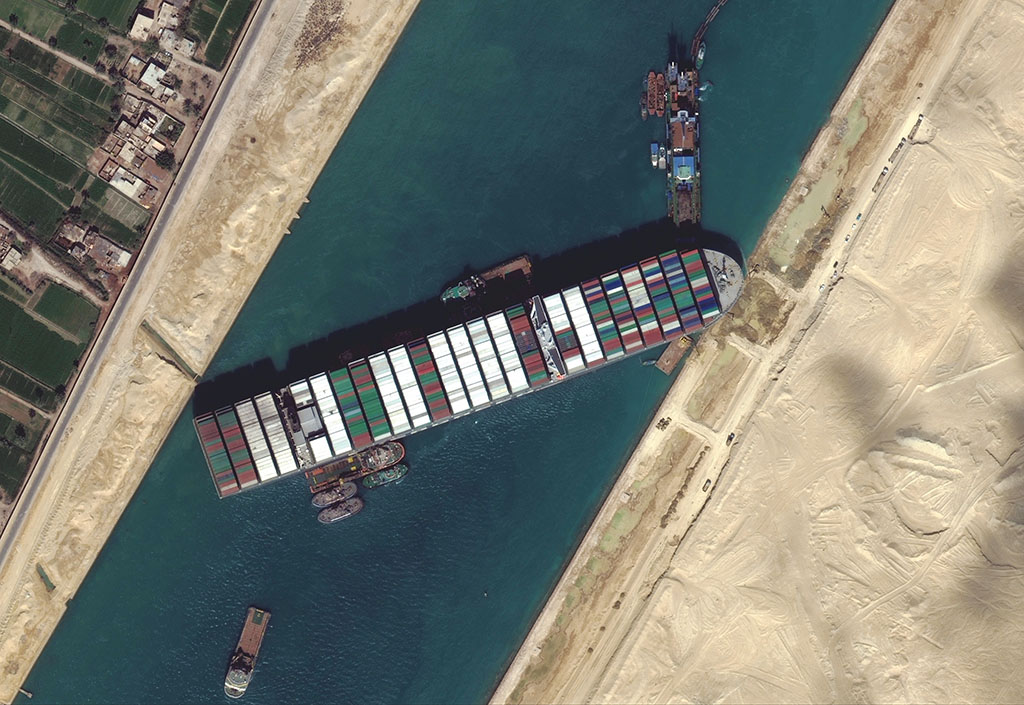 The Ever Presented, a container ship operated by a Taiwanese corporation, wedged by itself in a solitary-lane area of the Suez Canal. The proprietors explained superior winds in a sandstorm pushed the ship into that place.
The ship was refloated immediately after 6 days, but by then the destruction experienced by now been completed: more than 300 ships waiting to pass through the canal.
“Once this logjam clears out, we’re likely to have a huge backlog in some of the important European ports, so Rotterdam and Antwerp,” Ocean Insights COO Josh Brazil told Provide Chain Dive on March 31. Port delays had been by now envisioned to continue on very well into summertime without the need of the introduction of the Suez logjam.
Europe was envisioned to encounter the largest affect from the days-lengthy blockage, with the United Kingdom, Germany, Belgium, France, Netherlands, Italy, Switzerland, Spain, Turkey, and Austria envisioned to take on the most repercussions, according to Dun & Bradstreet analysts.
The industries in Europe envisioned to see the largest impacts incorporated consuming and ingesting establishments, building, wholesale trade, chemical substances and similar items, well being companies, food stuff retailers, industrial and business machinery, steel manufacturing, and automotive restore.
Vendors in the United States likely to be the most uncovered incorporated PVH, H&M, and Walmart, according to an investigation by S&P World.
The delivery artery, which connects the Mediterranean and Red Seas, plays a essential role in linking Asia to Europe and the Eastern U.S. About eighteen,800 vessels crossed through the Suez Canal, for an typical of just less than 52 ships for each day, according to figures from the Suez Canal Authority. Container ships accounted for 5,321 of people voyages in 2019, the latest full calendar year obtainable from the Authority.
There is an alternate route: sailing all over the southern suggestion of South Africa and the Cape of Fantastic Hope. But this can take 19 further days, relying on the measurement of the ship, specialists explained.


